 By Marcus Chen
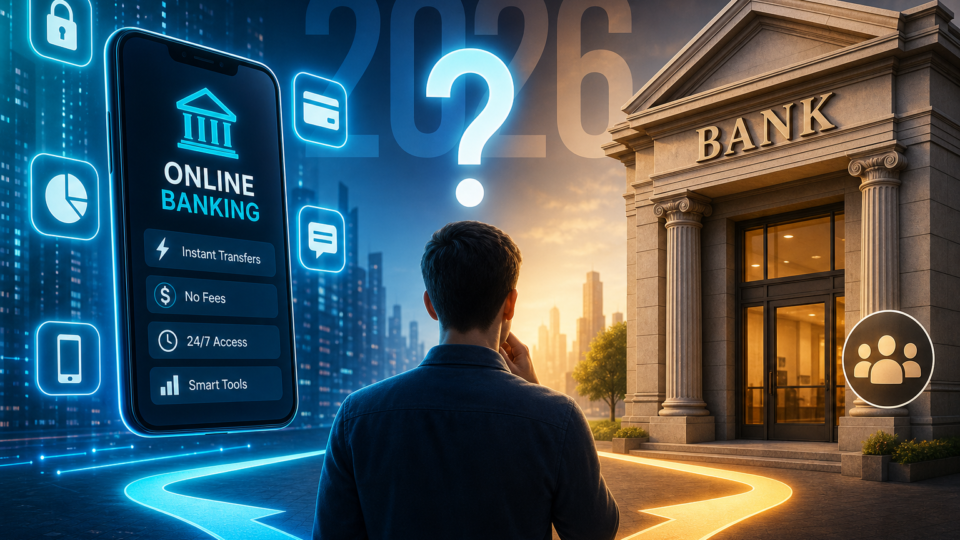
Picture yourself stuck in a slow-moving bank line, glancing at your phone, wishing you could be done with a few taps. Or maybe you’re comfy at home, scrolling through a polished banking app, but your side hustle pays mostly in cash, so you’re not sure digital-only will really work for you. In 2026, the choice between online banks and traditional branches isn’t as simple as picking the latest app or the nearest branch. It’s about the details of your life, your money habits, and what you’ll need next week—not just what looks modern today.
The upside? You can skip the guesswork. By zeroing in on what actually matters for your lifestyle, you’ll find a banking setup that fits and avoid headaches down the line.
Is Your Money Really Safe? FDIC Insurance in 2026
Security is the first thing people wonder about when changing banks. It’s tempting to think that a grand bank building must be safer than a digital account you open on your couch. But the reality in 2026 is that both online and traditional banks offer the same core protection: FDIC insurance applies to both types of banks, covering deposits up to the insured limit per depositor, per insured bank, for each account ownership category (see official FDIC guidance for specific coverage details). If a bank fails—whether it’s a neighborhood branch or a digital-only startup—your deposits up to that limit are protected.
Plenty of folks still feel uneasy about trusting money to an app, thinking a physical branch means extra security. But the rules are identical: both types of banks must meet the same federal insurance standards. Unless you’re keeping more than the insured amount at a single bank, the risk is the same, whether you prefer face-to-face service or digital convenience.
For most people, then, safety isn’t the deciding factor. What matters more is how you use your account—how you move money, get help, and deal with cash.
The Appeal of Online Banks
Online banks are all about convenience. If you’d rather manage your money from your phone late at night, send a transfer in seconds, and never rush to make it to a branch before closing, the digital route just makes sense. By 2026, most online banks offer lower fees, stronger savings rates, and apps that make it easy to pay bills, deposit checks, or move money between accounts.
Because they don’t have to run physical branches, online banks save on overhead, and those savings usually show up in the form of fewer fees or higher APYs. Some 2026 consumer banking comparisons say online banks frequently have fewer fees than traditional banks, but exact pricing still varies by institution.
People who get the most from online banks are usually those with predictable, mostly digital money flows: salaried workers with direct deposit, renters who pay bills online, or anyone who rarely touches cash. For these folks, managing everything through an app—transfers, deposits, even opening new accounts—feels seamless.
Where Traditional Branches Still Win

Despite all the buzz about digital banking, branches haven’t gone extinct for good reason. If your job or side gig pays you in cash, nothing beats being able to walk into a branch and deposit money straight to your account. Small-business owners, for example, might need to drop off cash deposits a few times a week, and that’s not something most online banks can handle well.
Branches are also best for people who want in-person help, especially for complicated banking needs. Maybe you need to set up a trust, fix a wire transfer gone wrong, or just feel better talking face to face when there’s a problem. Traditional banks have staff ready for these situations, and sometimes that personal help is what keeps things running smoothly.
A big change in 2026 is that most branch banks now offer solid digital tools, too. You can use good mobile apps, pay bills online, and transfer money with a few taps—so picking a branch bank doesn’t mean giving up tech, just adding the option to talk to someone if you want.
Cash Access: The Real Dealbreaker
Here’s where a lot of people run into trouble: how often do you actually handle cash? Even the best online banks can be frustrating if you’re regularly paid in cash, get a lot of tips, or need to make frequent cash deposits. Most online banks have limited or clunky options for cash deposits—they might rely on specific ATMs or third-party retailers, which can mean extra steps or fees.
Getting cash out is usually easier, since online banks give you access to national ATM networks. Still, you might face limits or be charged if you use machines outside their network. If you rarely use cash and get paid electronically, you probably won’t care. But if cash is part of your week, this one detail can make or break your banking choice.
It’s easy to get sold on app features or low fees, but if you’re driving out of your way every week just to deposit your earnings, you’ll feel that hassle quickly. Before you choose, think honestly about how you get paid and how you spend—not just what seems ideal on paper.
A Practical Checklist for Choosing Your Bank
To avoid picking a bank based on a friend’s favorite or a flashy ad, use this simple checklist:
Do you need to deposit cash often? If yes, a branch bank is likely the better choice. Online banks usually make cash deposits tricky or inconvenient.
Do you value in-person service? If you want to talk face to face or anticipate needing help with complex matters, go with a branch option.
Test the digital side. Even if you like having a branch, make sure the bank’s mobile app does what you need: transfers, bill pay, mobile check deposit, and instant alerts.
Compare fees closely. Online banks typically charge less, but always check for monthly fees, minimum balance rules, and possible ATM or overdraft charges. Don’t stop at the headlines—read the details.
How is your income structured? If your pay comes via direct deposit, online banks work well. If your income is irregular or in cash, branch access saves you trouble.
Need special banking services? For business accounts, trusts, or large wire transfers, traditional branches usually have more options.
Walking through these steps helps you cut through marketing and focus on your real needs. If a routine task feels clumsy with a bank, that’s a red flag.
Real-World Examples: Which Bank Fits Your Life?

Consider two different scenarios:
Case 1: The Digital-First Renter
Jessica works from home, gets paid by direct deposit, pays rent and utilities online, and hasn’t touched cash in years. She likes checking her balance on her phone and occasionally sends money to friends. For Jessica, an online bank is the obvious pick. She gets minimal fees, better savings rates, and never worries about branch hours.
Case 2: Cash-Heavy Small Business Owner
Carlos runs a food truck and ends the day with a stack of cash to deposit. He needs a business account and sometimes wants in-person advice about loans or merchant services. For him, a traditional branch is the way to go. The ability to deposit cash and talk to staff is worth any added fees.
Plenty of people fall somewhere between these examples. Maybe you’re mostly digital but want the option to visit a branch once in a while. Many banks now offer hybrid setups, but knowing your key habits up front helps you dodge mismatches that create headaches.
Making the Switch—What Happens Next
Once you’ve used the checklist and assessed your routine, the next steps are pretty straightforward. If you’re going digital, most online banks let you open an account right on their website or app. You’ll usually need an ID and a funding source, like a direct deposit or a transfer from another account. Most people can start using their new online account within a few minutes to a couple of days.
For traditional branches, you can often begin the process online too but might need to stop by in person to finish paperwork, especially for more complex services. Take this chance to ask any lingering questions—branch staff expect new customers to need a little extra guidance.
Before moving all your automatic payments or closing your old account, it’s wise to test your new account thoroughly to ensure it meets your needs and watch for any surprise fees or missing features. For up-to-date guidance on timing and best practices, check your bank’s official website or customer service resources.