 By Marcus Chen
Bank fees have a way of creeping up on you. Maybe it’s $10 here, $12 there, or another $3 for using an ATM that isn’t “approved.” Over time, those charges quietly eat away at your savings, and when you finally add it all up, it’s a headache no one wants. With budgets stretched and interest rates starting to reward savers again, more people are asking: Why am I still paying my bank just to hold my money? The good news is you don’t have to—if you know what to look for. But with so many banks promising zero fees, spotting a genuinely free account takes some close attention to the details.
What Does “No Monthly Fee” Actually Mean in 2026?
A $0 monthly fee headline doesn’t always tell the whole story. In 2026, the difference between a truly free online account and a “mostly free” one comes down to the fine print. A real fee-free checking account has no monthly maintenance fee, no minimum balance, and—just as important—no hoops like setting up direct deposit or hitting a transaction minimum to avoid charges.
Big names like Ally, Axos, Capital One 360, SoFi, and Chime all advertise zero monthly maintenance fees. Still, the devil’s in the details. Take Capital One 360 Checking: it skips monthly fees, has no minimums, and doesn’t charge overdraft fees, no matter your balance. So if you have a month without a direct deposit, you’re not penalized. That’s the difference between “unconditional” and “conditionally free”—and it’s where most people get tripped up.
Always read the terms. If you see anything like “fee waived with $500 minimum balance” or “direct deposit required,” that account isn’t truly free. The best banks in 2026 put their $0 promise in plain sight, with no footnotes or hidden strings.
Why Online Banks Offer Better Savings Rates
Interest rates might sound like background noise until you see how far traditional banks have fallen behind. In 2026, the difference is glaring: major brick-and-mortar banks like Chase and Bank of America are still offering about 0.01% APY on savings. Meanwhile, many online banks are promoting rates over 4% APY—hundreds of times more.
This isn’t just slick marketing. Online banks can pay more because they don’t have to maintain physical branches, and they pass those savings to customers. Bankrate’s latest rankings confirm higher yields are now standard for digital banks. For anyone with even a small emergency fund, that means your money can actually earn some real interest, instead of sitting idle.
A lot of online banks bundle their high-yield savings with no-fee checking in one place. Varo Bank is a good example—offering both without hidden fees, so you can keep everything simple and avoid surprises that cut into your returns.
Comparing the Top No-Fee Online Checking Accounts
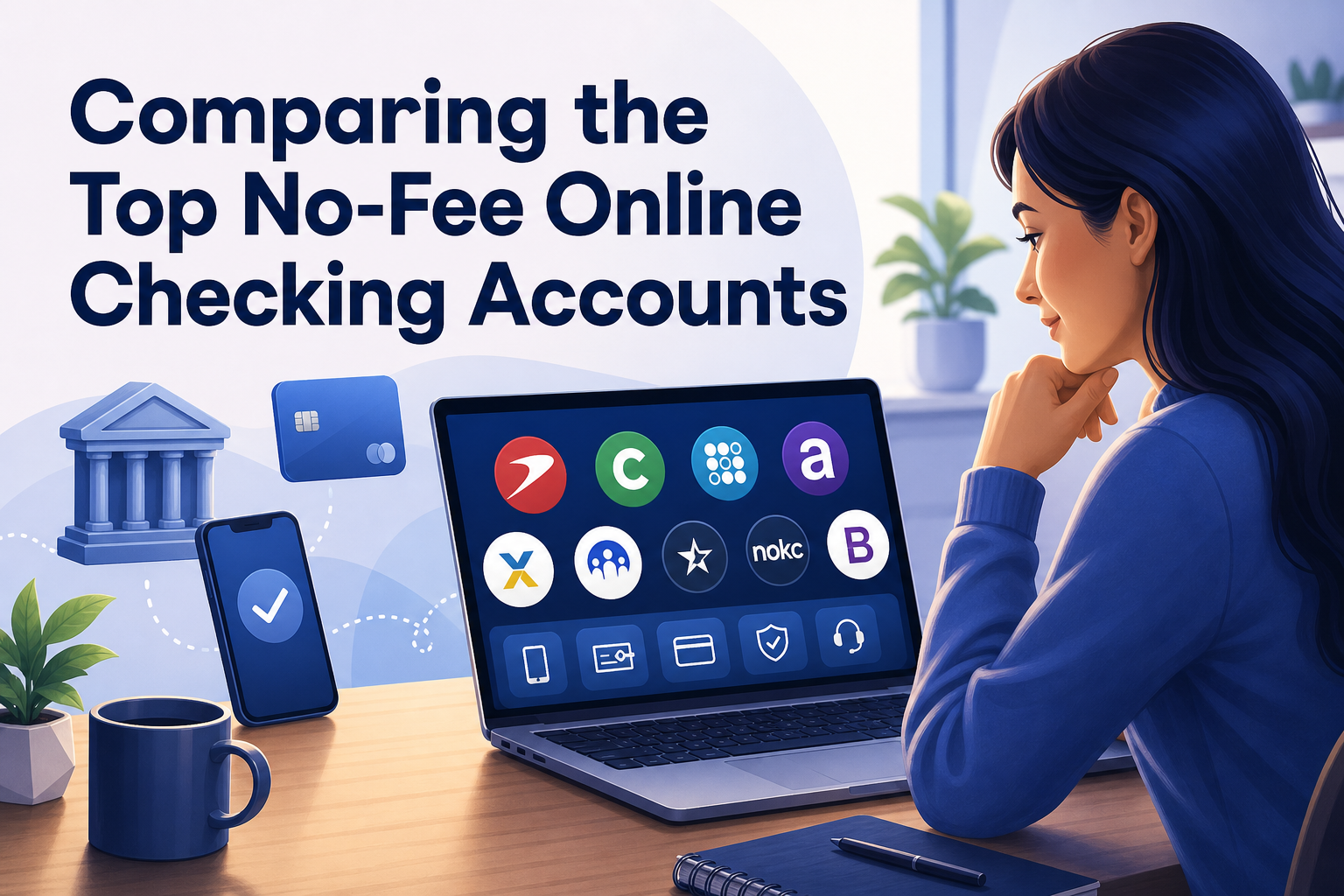
With so many choices, it helps to see how the best accounts measure up. Reviews in 2026 usually point to a familiar lineup: Capital One 360, Chime, SoFi, Ally, Axos, Connexus, Alliant, NBKC, and Bask Bank. What puts these banks out in front isn’t just the lack of fees—it’s how they combine zero monthly costs with great digital tools and customer-friendly policies.
Capital One 360 Checking is often the standard for comparison. In 2026, it has no monthly fee, no minimum balance, no overdraft fees, and even pays interest on your checking balance. The account also gives you access to more than 70,000 fee-free ATMs. SoFi’s online checking is another standout, with no account fees, no minimums, free overdraft coverage up to $50, and a huge ATM network. Chime’s account is simple, no monthly fees, no minimums, and no overdraft fees—easy to keep track of.
Ally’s Spending Account and Axos Bank’s checking also deserve a look. Both offer $0 monthly maintenance fees, no overdraft fees, no minimums, and pay interest. NBKC’s Everything Account and Connexus accounts add perks like bundled savings, ATM reimbursements, and free overdraft transfers. The pattern is clear: the best online banks in 2026 don’t make you pay just to use your own money, and their apps are genuinely user-friendly.
ATM Access and Reimbursements Matter
Even if you pay everything digitally, you’ll eventually need cash. That’s when ATM access can make or break your banking experience. The top no-fee online banks have expanded their ATM networks, some offering 37,000, 55,000, or even over 70,000 fee-free ATMs.
Capital One 360 Checking consistently gives access to more than 70,000 ATMs, making it easy to find a machine without extra charges. SoFi offers more than 55,000, and Connexus tops 67,000 surcharge-free ATMs. Even if you rarely use cash, knowing you can find a free ATM almost anywhere helps avoid last-minute fees.
If you ever need an out-of-network ATM, some banks help cover those costs too. Alliant reimburses up to $20 per month in ATM surcharges, and NBKC covers up to $12 monthly. For frequent travelers or anyone in an area with fewer free machines, these reimbursements really add up.
When comparing banks, look at both the network size and the reimbursement policy. If you hit ATMs often, those small details can mean real savings over time.
Reading the Fine Print Before You Open an Account
The difference between a decent and a great online bank is usually hiding in the fine print. Start by downloading the bank’s full fee schedule—look for sections like “Account Fees” or “Service Charges.” Don’t just trust banners or homepage claims. Scan for any mention of monthly maintenance fees. Phrases like “fee waived with $500 minimum balance” or “waived with direct deposit” mean the account isn’t truly free.
Check the overdraft policy, too. Banks like Ally, Axos, and SoFi either charge nothing for overdrafts or clearly spell out their fee-free coverage. Also review charges for less common services like paper statements, wire transfers, or foreign transactions; those can sneak up on you if you use them.
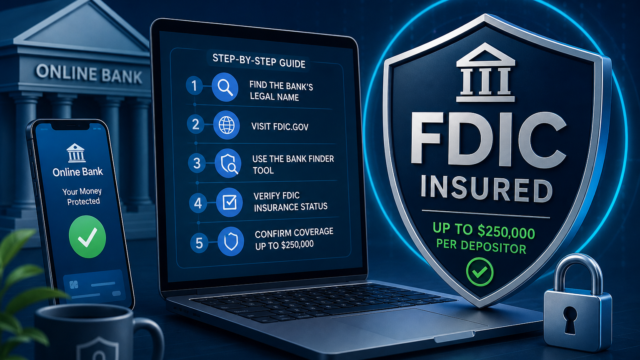
Make sure the bank is FDIC or NCUA insured. Most display this on their website, but you can double-check through the official FDIC or NCUA databases. And don’t overlook the mobile app—read some user reviews, and try out the support tools if you can. NerdWallet, Forbes Advisor, and CNBC Select all highlight good customer service as a key factor in their 2026 picks.
A Practical Checklist for Choosing a No-Fee Online Bank
Finding the right account doesn’t have to be complicated. Here’s a straightforward checklist for a confident no monthly fee online bank selection:
Make sure the checking account’s monthly maintenance fee is clearly listed as $0 in the bank’s official fee schedule.
Look for any minimum balance or direct deposit requirements—real no-fee accounts don’t have them.
Confirm FDIC or NCUA insurance on the bank’s website or the official regulator’s database.
Review overdraft policies, and choose accounts with $0 charges or transparent, fee-free coverage.
Check ATM access: aim for networks with 37,000+ fee-free ATMs, and see if there are monthly caps on out-of-network reimbursements.
Compare interest rates and rewards—not just for savings, but for checking balances too.
Test the mobile app, read user ratings, and make sure customer service is easy to contact and responsive.
Independent sites like NerdWallet, CNBC Select, Forbes Advisor, and Yahoo Finance regularly update their lists of the best online banks, making it easier to find $0 fee accounts with top digital features.
How Much Can You Save by Going Fee-Free?

Switching to a no-fee online account puts real money back in your pocket. Traditional banks often charge $10–$15 a month just for keeping your account open. That’s $120–$180 a year, even before you count overdraft or ATM fees. If you use out-of-network ATMs, the costs keep climbing.
Say you move from a $12/month account to an online checking account with no fees. Instantly, you’re saving $144 a year. Add in overdraft coverage and ATM reimbursement—like Alliant’s $20/month or NBKC’s $12/month—and it’s easy to reach several hundred dollars in savings each year.
If you move your savings to an online bank paying over 4% APY instead of letting it sit at 0.01%, you’ll see even more benefit. Even a small emergency fund starts earning noticeable interest while you avoid unnecessary fees.
How to Make the Switch to a No-Fee Online Bank
Changing banks might sound like a hassle, but switching to an online bank is often easier than it seems. Start by opening your new account and linking it to your old one so you can move your funds. Update your direct deposit, any recurring payments, and subscriptions. Give it a couple of weeks to catch any stray payments, then close your old account when everything has cleared.
Most leading online banks offer step-by-step guidance to walk you through the process, and digital support teams are usually quick to help if you get stuck. The biggest change tends to be getting used to not having a physical branch—most people find the mobile apps and online chat fill the gap just fine. With strong digital tools and wide ATM networks, the move is usually smooth, and the savings quickly make up for any inconvenience.
If you’ve ever felt frustrated by bank fees just for accessing your money, now’s the time to take action. With a bit of research, you can move to a genuinely free online bank and start letting your savings grow—without any more slow leaks to hidden costs.