 By Marcus Chen
You’re scrolling through a list of online CD rates, and that bold 4% APY jumps off the screen. In a year when the headlines keep warning that rates might drop, a number like that feels like a small win. But if you’ve ever been burned by a CD that tied up your money longer than you expected or paid less than you thought, you know those big numbers can hide a lot of hassle. In 2026, with banks in a race to grab deposits, reading between the lines isn’t optional—it’s what keeps your savings on track.
Online CD Rates in 2026: The Big Difference
The spread between online CD rates and the national average jumps out this year. The FDIC puts the average APY for a 1-year CD at 1.55% in February 2026. Compare that to several well-known online banks, where rates near 4% APY for the same term aren’t uncommon. Marcus by Goldman Sachs, for instance, has a 1-year CD at 4% APY as of March 2026—over double what you’ll get at most traditional branches.
That difference has a clear reason: online banks and credit unions don’t have to cover the costs of physical locations, so they can pay more to attract deposits. Bankrate’s July 2026 numbers show the pattern—traditional 1-year CDs average 1.99% APY, while online-only options regularly top 3.8%. You can actually earn two or three times more than the national average if you choose the right online CD. But those eye-catching deals often come with small print that can trip you up.
It’s easy to get caught up in the APY and miss what’s buried in the details. The highest rates usually include strings, and missing them can cost you access, flexibility, or even part of your return.
High Minimum Deposits: The First Hurdle
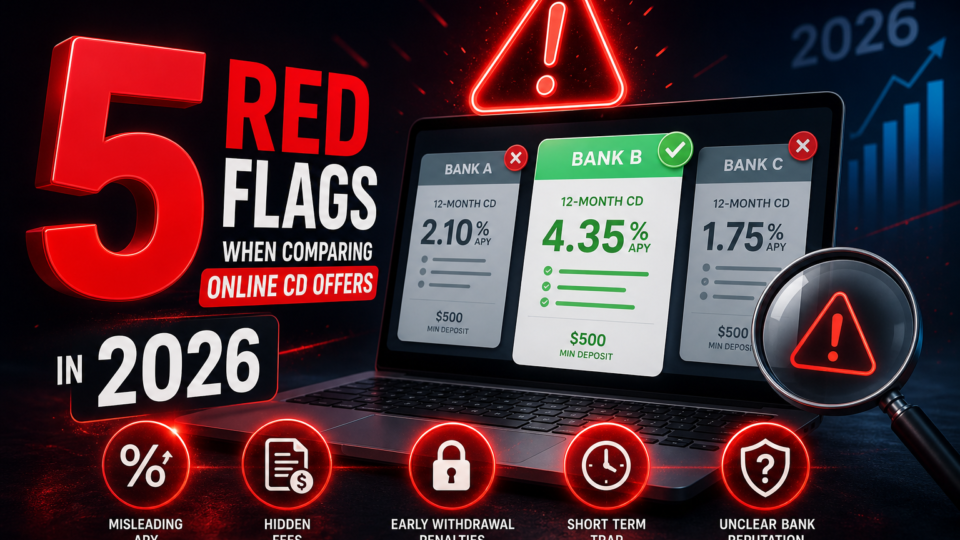
One of the top red flags comparing online cd offers is a minimum deposit that’s much higher than the competition. In 2026, online CDs set all sorts of minimums. Some let you start with $500 or $1,000, but others—especially “jumbo” or promotional deals—require $10,000 or more.
This isn’t just a minor detail. A CD with a $10,000 minimum locks up a big chunk of cash, and sometimes the “premium” rate for that minimum is barely better than what you’d get with a much smaller deposit elsewhere. MyBankTracker points to this as a classic warning: if the minimum deposit looks way out of line for the APY, it’s worth pausing before you commit.
When I compare offers, I always line up the minimum deposits side by side. If most top APYs let you in for $500 or $1,000, but one wants $10,000 for only a slight bump, I move on. That keeps my cash flexible and avoids a situation where more money is stuck than I’m comfortable with.
Early Withdrawal Penalties: Watch for Vague Wording
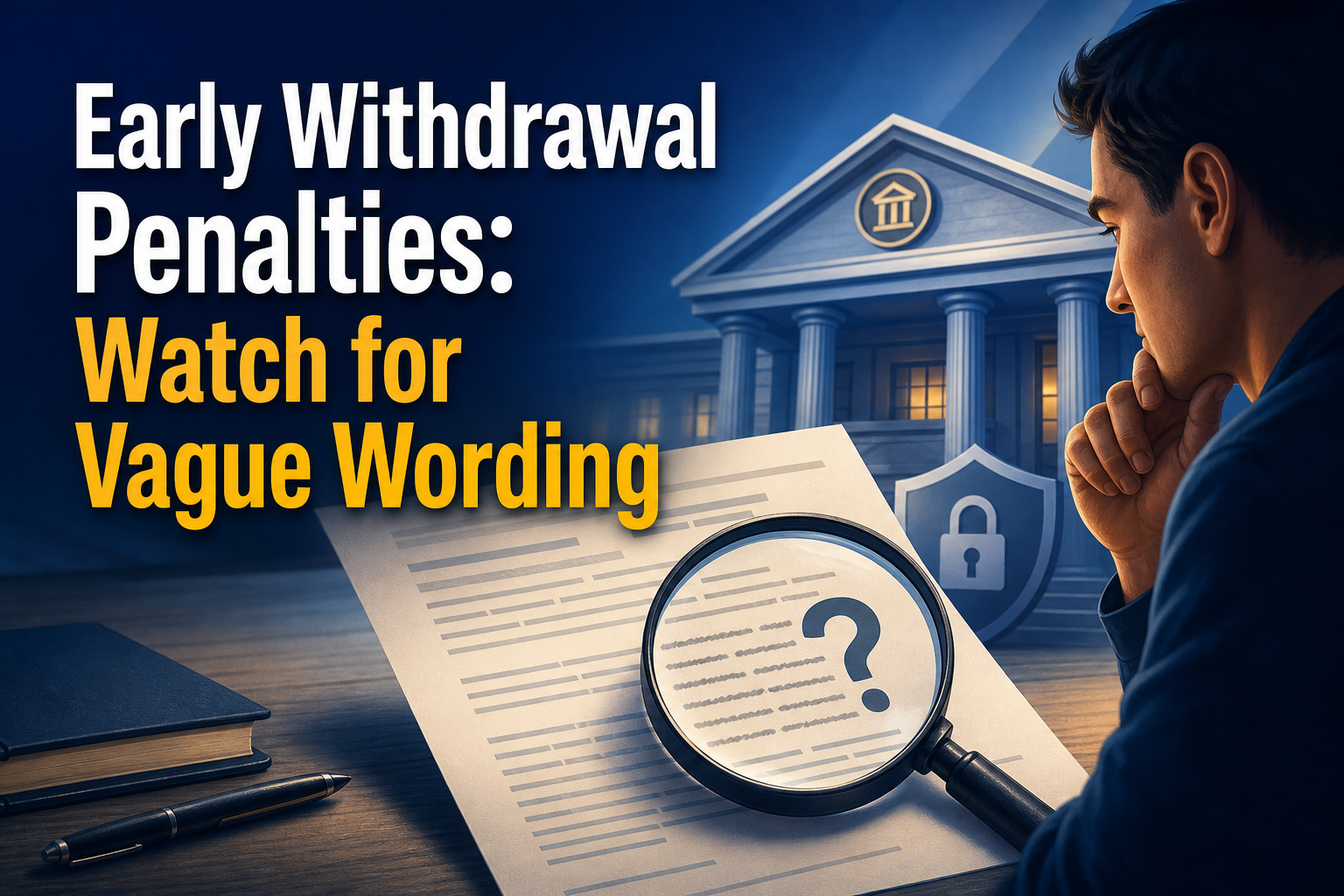
A flashy APY can make it tempting to skip straight to the application, but the penalty details are where many CD deals hide their real costs. In 2026, some banks use vague penalty language such as “penalties as described in your agreement” or “subject to bank policy,” leaving you unsure what you’ll actually owe if you need the money out early.
It’s important to carefully review the early withdrawal penalty disclosures in detail. Many sources warn that if the penalty isn’t plain, it could be bigger than you bargained for.
Before opening any CD, I go straight to the penalty section and read every line. If I can’t find a concrete example of what an early withdrawal costs, I email or call for details. If the answer still isn’t clear, I pick another offer. This one step has saved me from ugly surprises more than once.
Auto-Renewals: The Quiet Rate Drop
Auto-renewal policies don’t get much attention, but they can quietly cost you hundreds in lost interest. MyBankTracker flags automatic renewals at much lower rates as a classic red flag: your CD might renew at maturity with a new APY that’s far below the promotional rate you locked in. The bank could bury the new rate in the fine print or send a notice just days before renewal.
You could sign up for a CD at 4% APY, but if you forget to opt out before the term ends, you might end up earning 3% or less for the next year. The window to cancel auto-renewal is often limited, so it’s important to check the renewal details carefully.
When I open a new CD, I always check the renewal details and add the maturity date to my calendar right away. That reminder makes it easy to act in time and not get stuck with a lower rate.
Post-Maturity Access: Don’t Assume It’s Immediate
You’d think that once your CD matures, getting your money would be as simple as logging in and hitting “withdraw.” But in reality, some online banks have restrictions or delays even after your term is up. MyBankTracker lists this as a key risk to watch for. Always scan the account agreement for anything about what happens at maturity. Does the bank spell out how you can access your money? Are transfer methods or amounts limited? Some places require notice or extra steps just to move your funds.
Before you lock in, get clear on exactly how you’ll get your cash back. If the process feels complicated or if you can’t find the answer in writing, I’d take it as a sign to keep searching. Quick, no-hassle access at maturity is as important as the interest rate itself.
Should You Lock In Now? The Timing Question
The timing on CD rates in 2026 is tricky. Since late 2024, the best online CD APYs have slid—from a high of 4.60% in September 2024 to about 4.00% by early 2025 and 3.82% by November 2025. As of March 2026, you can still find one-year terms around 4% APY, but forecasts from Experian and NerdWallet show more drops coming as the Fed trims its target rate toward 3.00%–3.25%.
With the national average between 1.55% and 1.99% and top online options above 3.8%, there’s a real incentive to act before the next rate cut. Still, it’s a mistake to rush in and miss the warning signs I’ve described here. The trick is balancing urgency with a close look at the details—rate, terms, flexibility—so you don’t give up too much for a headline number.
If you’re thinking about a new CD, use this window to dig into the fine print. Rates might not be this high again for a while, but a single gotcha in the terms can wipe out the extra yield.
Insurance: FDIC and NCUA Still Matter
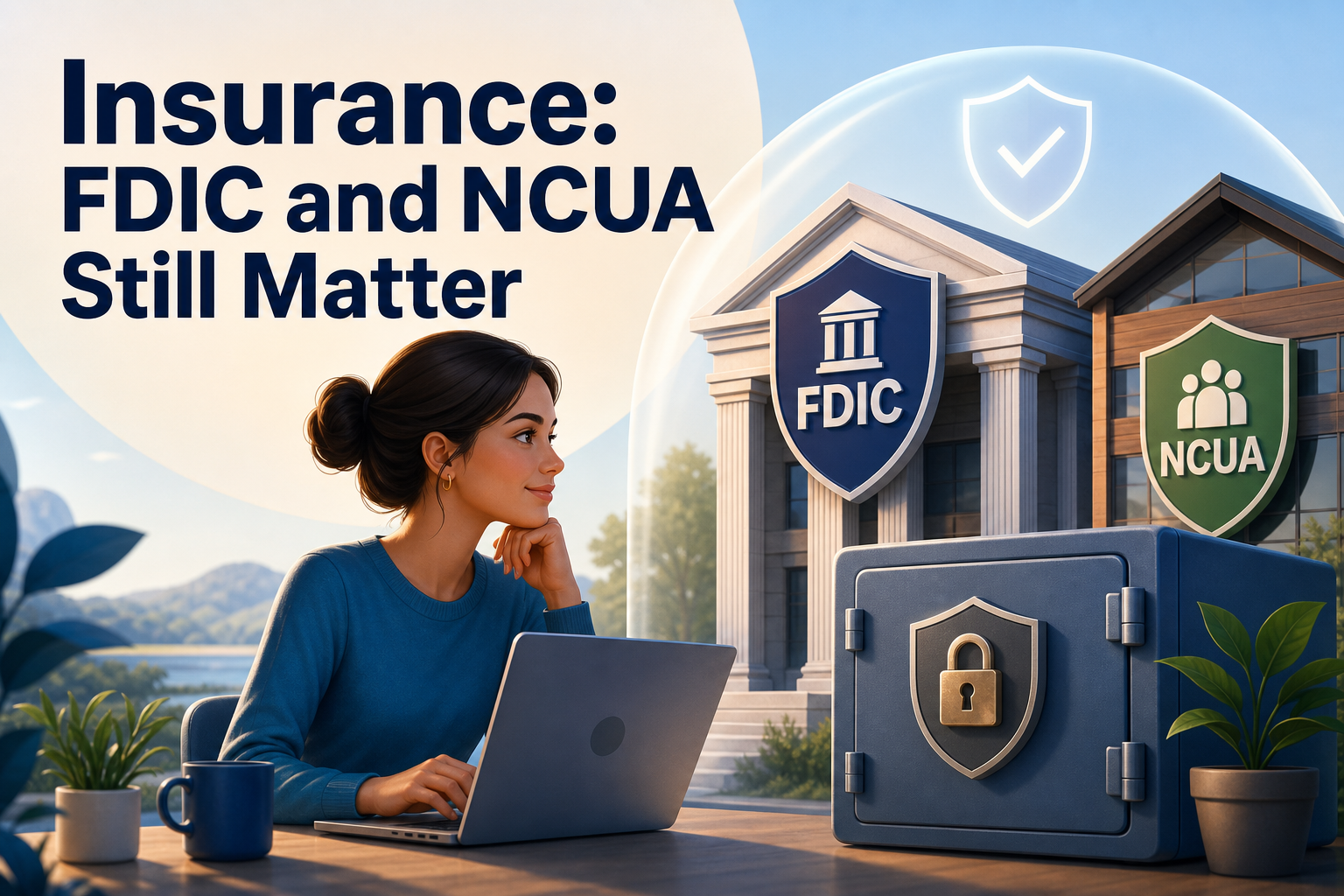
A big APY only matters if your money is safe. Confirming FDIC or NCUA insurance remains an essential step in 2026. Most online banks and credit unions display their insurance status, but especially with newer names, it’s smart to double-check.
Check the institution’s website for clear mention of FDIC (for banks) or NCUA (for credit unions) coverage. If that information isn’t easily found, official tools provided by the FDIC or NCUA can help verify insurance status. Offers that say “eligible for insurance” but don’t confirm it in writing are a red flag, not a green light.
Personally, I keep my deposits within the insured limits for each institution. If you’re spreading funds across several CDs, make sure each one is at a separately insured bank or credit union. That way, every dollar is protected.
How I Compare CDs Now
Online CD shopping in 2026 is about more than chasing the biggest APY. The real win comes from knowing exactly what you’re signing up for and making it a habit to check for pitfalls.
My checklist for every offer:
If it isn’t simple, I don’t bother.
Taking these steps gives you more control and fewer headaches. You know the rules, you keep your options open, and your cash works as hard as possible—without surprise strings. In a year when rates are in motion, it’s one of the simplest ways to make your savings count.