 By Marcus Chen
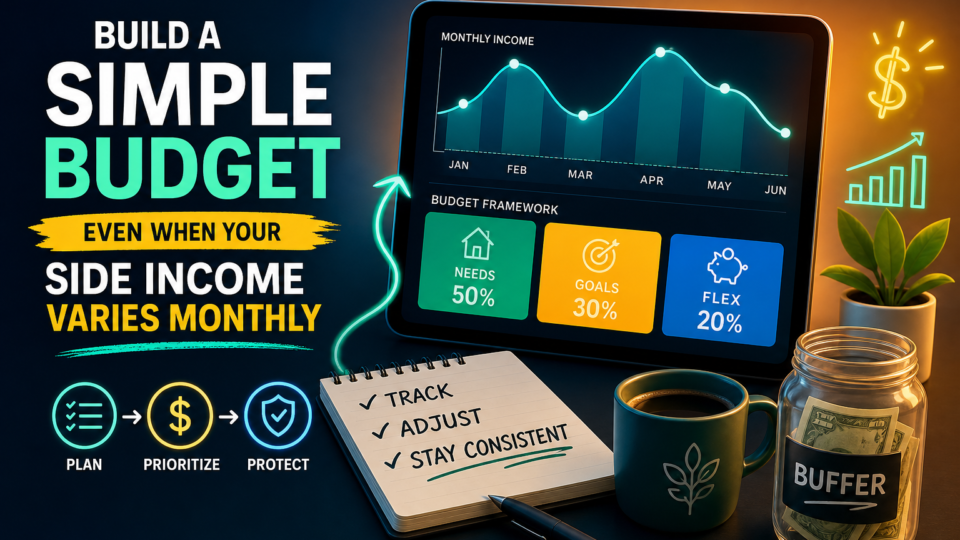
You know that rush when your side gig pays out big—the excitement of a strong month, then the reality check when a few weeks later your deposits slow to a trickle. But two months later, you’re staring at your bank balance, realizing you only made $1,000 and rent’s due soon. The real stress isn’t just about bills piling up, but never really knowing if your side hustle will cover them this month. If it feels like you’re always in a cycle of feast or famine, you’re definitely not the only one. The good news: there’s a straightforward way to bring order to your finances, even when your income is anything but steady.
Find Your True Baseline—Ignore the Highs
Most traditional budgets start with your “average” monthly income, but averages don’t mean much when your side hustle earnings are unpredictable. Instead, look back over the past 6 to 12 months and find the month you earned the least. That’s your real baseline—the amount you can actually count on, even during your slowest season.
The reason for this isn’t about pessimism. If you build your budget around your highest-earning month, you’ll constantly come up short and risk overdrafts. For example, if you made $3,000 in March and only $1,200 in July, using $3,000 as your planning number will just set you up to overspend. Plan with your lowest month as your base, and you’ll avoid scrambling when things get slow. That’s the approach recommended by the Nebraska Department of Banking and Finance and similar organizations for anyone who doesn’t have a fixed paycheck.
If your side hustle income varies widely across the year, your baseline is the lowest figure in that window. It might feel strict, but it gives you the peace of mind that essentials are always covered—no matter how up and down your gigs get.
Use Two Bank Accounts to Simplify Your System
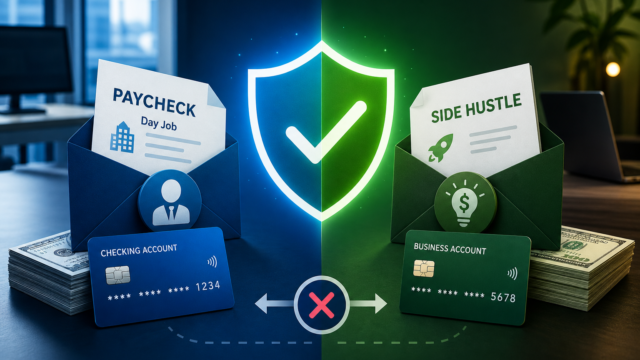
Trying to juggle everything from a single checking account when your income is unpredictable is confusing and stressful. I’ve found that splitting your money between two accounts makes things a lot clearer. Start by designating one account as your Income Holding Account. Every gig payment, tip, or freelance transfer goes here first. Don’t touch this money yet.
Pick a specific date each month—maybe the 1st or the day after your biggest gig payout—and move your “salary” (that baseline you calculated) into a separate Expenses Account. This is the account you use for bills, groceries, and day-to-day spending. Any money left in your holding account builds up as a buffer for slower months.
This setup turns your unpredictable income into a steady flow. You’re basically paying yourself a set amount, even if the money comes in all over the place. Many side hustlers say this change alone makes their finances feel calmer and helps them avoid blowing extra cash as soon as it hits.
Why a Buffer Fund is Essential

Even with a clear system, life happens. Clients pay late, apps slow down, or your car suddenly needs repairs. That’s why having a buffer fund—sometimes called an emergency fund—isn’t optional when your income is variable. Start by saving at least one or two months’ worth of your baseline expenses in a separate account (not your daily spending money).
This buffer is your cushion when things don’t go as planned. Over time, aim to build it up to cover three to six months’ of basic expenses. As of 2026, most financial guides for gig workers call six months the ideal goal. That way, you’re covered for bigger gaps or unexpected hits.
It’s practical to move any extra money from high-earning months directly into this buffer. For instance, if your baseline is $1,100 and you make $1,800, transfer that $700 surplus to your buffer fund before spending on anything extra.
Use a Tiered Budget to Protect Your Priorities
Not every expense is equally important—especially when money’s tight. That’s where a tiered budget comes in. List your must-pay bills first: rent or mortgage, utilities, groceries, transportation, insurance, and minimum debt payments. These are your Tier 1 essentials. They always get paid, no matter what.
Once those are handled, look at Tier 2: nice-to-have extras like eating out, streaming services, or movie tickets. If you can afford them, great—if not, you can pause or cut back.
If there’s anything left after Tiers 1 and 2, move to Tier 3: extra goals and treats—like saving for a new laptop, travel, or investing back into your business. When you have good months, you can put more into these. In tough months, you stick to Tier 1 and maybe a bit of Tier 2.
Zero-based budgeting (assigning every dollar of your salary to a purpose) makes this system even stronger. That way, no money sits around waiting to be spent on a whim—your spending always matches your top priorities.
Don’t Let Taxes Catch You Off Guard
One of the roughest surprises for side hustlers is the tax bill each spring. Gig and freelance income usually doesn’t have taxes taken out automatically. To avoid a panic later, treat every payment as business income and move about 25% to 33% of each deposit straight into a tax savings account.
Say you get $500 from a client—immediately move $125 to $165 into your tax fund. It might feel like a lot, but it’s what financial pros recommend for self-employed and 1099 workers. Setting aside taxes as you go means you’re ready when tax season hits, without nasty surprises.
If you over-save, you’ll just have extra left over. But if you fall short, you could face penalties or a stressful scramble to pay the IRS. It’s a small habit that saves a lot of headaches.
What to Do With Surplus Income in Strong Months
Every so often, your side hustle will outperform your baseline. Maybe you land a big client, pick up extra shifts, or just have a lucky streak. When that happens, don’t treat all the extra as “fun money.” Use a simple percentage split to decide what to do with the surplus.
A practical breakdown I use: 40%–50% of the extra goes to your buffer fund until you hit your savings goal, 30% to debt payments, 15%–20% to taxes (if you’re self-employed), and the last 5%–10% for a treat or something purely for fun.
For example, if your baseline is $1,100 and you pull in $2,000, that’s $900 extra. You might put $400 into your buffer, $270 toward debt, $180 to taxes, and use $50 for a dinner out. This way, you’re building your safety net, paying down debt, and still enjoying a reward without derailing your progress.
Build a Weekly Habit for Money Check-Ins
When your income changes every week, waiting until the end of the month to look at your money is a recipe for trouble. Instead, block out ten minutes once a week for a quick money check. Open your banking app, see what’s come in from each gig, and check both your holding and spending account balances. Then, glance ahead at upcoming bills.
This weekly check helps you spot problems before they get big. If a client pays late, you’ll know right away—not after you’ve already spent the money. If you had an unusually good week, you can move the extra to your buffer or debt payments while it’s still fresh.
After a few weeks, this check-in feels as normal as looking at your calendar or checking the weather. The peace of mind is worth the small time investment.
Most Side Hustlers Deal with Income Swings

If you’ve ever thought you’re the only one with unpredictable pay, you’re in good company. A temp worker budgeting guide found about 57% of gig workers have income that jumps around every month. Swings and late payments are standard in the gig world—the real difference is how you handle them.
People in all kinds of gigs face the same challenges, whether they’re driving rideshare in Houston or editing podcasts in Portland. Systems—not luck—are what help them make it work.
Knowing this isn’t just your struggle makes it easier to shake off the shame or stress during slow spells. These ups and downs are normal, and so are the fixes.
Putting Your Budget System Into Action
Once you start using the lowest month method, set up two accounts, and check in weekly, you’ll notice your money feels steadier—even if your side gigs are still unpredictable. The first month can be awkward, especially when you need to hold back after a big payout or skip extra spending when things are slow. But with a few cycles, you’ll see your buffer grow, tax savings stack up, and your stress level drop.
If you want your finances to finally fit the reality of side hustle life, try this system. Open those two accounts, figure out your lowest month, and pay yourself that “salary” this month. Each small step builds more confidence and makes your money work for you, so you can actually enjoy the freedom of a side hustle without dreading the next dry spell.