 By Marcus Chen
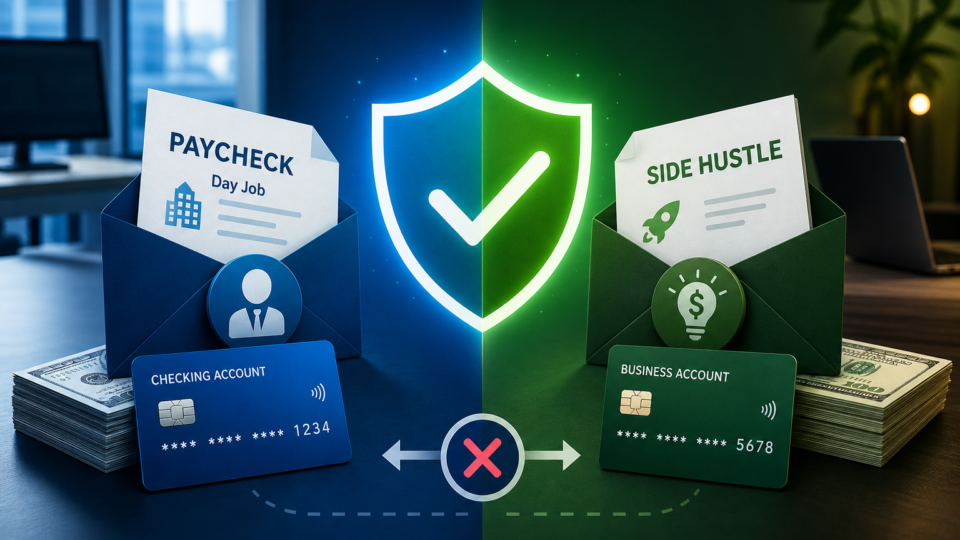
You log into your bank account at the end of a long week, feeling good about the extra cash you’ve earned from selling crafts online or picking up freelance projects after hours. But then reality sets in: all your money, from both your main job and your side gig, is sitting in the same checking account. It’s suddenly hard to tell what’s yours to spend and what you’ll owe in taxes. Maybe you’ve caught yourself searching for old receipts or trying to figure out which deposit was for your salary and which was for your small business. If this sounds familiar, you’re definitely not the only one facing this mess—and you don’t have to accept chaos as the norm.
Why It Pays to Separate Your Income
Combining your regular wages with side gig earnings may seem convenient, but the IRS treats them very differently once tax season arrives. Your day job income (on a W-2) and your self-employment money each have their own reporting rules. If everything commingles in one account, things can quickly get tangled—especially if you’re ever asked to provide records for an audit.
When all your deposits show up together, it’s easy to lose track of which spending counts as a business expense versus something personal. That confusion can cost you legitimate deductions and might make it tough to explain your numbers if the IRS comes calling. Worse, missing or misreporting self-employed income could mean penalties you didn’t expect. Keeping clear records isn’t just about being organized—it’s the foundation for staying out of trouble and protecting your finances.
Open a Separate Bank Account for Your Side Hustle
A dedicated checking account for your side hustle is one of the easiest ways to keep your money straight. You don’t need a fancy business account to start. Many people just open a second personal checking account at the bank they already use, dedicated to business transactions only. The important part: salary and side gig money never mix in the same place.
Once you’ve got a separate account, direct every side hustle payment—freelance clients, online sales, gig platforms—into that account. Pay for business expenses from this account, too, whether it’s supplies, ads, subscriptions, or gas for deliveries. Your personal bills and spending should stay in your main account. When you look at your statements later, you’ll see a clear line between business and personal cash flow.
A setup that works for plenty of solopreneurs and employees: your paycheck goes into your usual checking account, a second account handles all side hustle activity, and a third, separate savings account is where you stash away money for taxes. Every dollar has its spot, which makes everything simpler when tax season arrives.
How Schedule C Fits Into the Picture
When it’s time to do your taxes, this separation makes your life much easier. If you’re a sole proprietor, you’ll report your side gig’s income and expenses on IRS Schedule C, which goes along with your Form 1040. That’s where you add up all your receipts, subtract your costs, and figure out your net profit or loss.
If you’ve kept side hustle income and expenses in their own account, filling out Schedule C is a much faster job. You can quickly pull totals for what you earned, see who paid you, and list every deductible expense. This saves you from hunting through a year’s worth of mixed transactions and wondering what you forgot.
Schedule C isn’t just paperwork. It tells the IRS how much you really made, how much you owe in self-employment tax, and whether your numbers match what they hear from 1099s or other tax forms. If you start the year with everything sorted by account, you’ll avoid a last-minute scramble to explain your business finances.
The IRS Cares About $400 and $1,000
There are two numbers every side hustler needs to know: $400 and $1,000. If your net profit from self-employment hits $400 or more in a year, the IRS requires you to report it and pay self-employment tax. That $400 threshold isn’t just a suggestion—it’s in the official IRS rules.
The $1,000 number relates to estimated taxes. If you expect to owe at least $1,000 in taxes from your side gig after accounting for what’s withheld from your paycheck, you’re expected to make quarterly estimated tax payments throughout the year. If you think you might owe this much, check the IRS official rules for how and when to pay estimated taxes to avoid any surprises.
With your business money separate from your salary, you can see when you cross these numbers. That lets you plan for quarterly payments and stay on top of deadlines, instead of getting caught off guard by a tax bill you didn’t see coming.
Bookkeeping Habits That Actually Work
Opening a separate bank account is just the first step. Keeping good records is what really helps when you need to answer questions or prove your numbers. Set up a simple spreadsheet or use an accounting app—whatever feels manageable—to log every side hustle payment, expense, fee, and refund. Write down the date and a short description for each one.
The IRS expects more than just totals on a spreadsheet. You need to save copies of receipts, invoices, payout reports, and any mileage logs if you drive for your business. A folder on your computer or a paper file near your desk works fine if you stay in the habit of adding new documents as they come in.
Each month, take a few minutes to reconcile your business checking account. Match up deposits with what clients or platforms paid you and check that each expense lines up with a receipt. This routine keeps you ready for tax time and helps you spot errors or mix-ups before they become bigger problems.
When an EIN Makes Sense
Most people starting out just use their Social Security number for tax forms, but sometimes it’s smart to get an Employer Identification Number (EIN) from the IRS, even if you don’t have employees. An EIN is a unique business ID that keeps your business paperwork separate from your personal information.
If you want to open certain business accounts, work with clients who require something besides your SSN, or simply keep your business life a bit more private, requesting an EIN from the IRS can help. Using an EIN on contracts or tax forms can also add a layer of professionalism, which some clients appreciate.
You don’t need an EIN for every side hustle. But if your business starts growing or you want to take on bigger projects, having that extra separation can make things simpler for both you and your customers.
Make Sure You Don’t Spend the IRS’s Money

One of the biggest mistakes I see with new side hustlers is accidentally spending the money that should go to taxes. After a nice payday, it’s tempting to dip into your business account like it’s a bonus. But if you don’t set aside what you owe, tax season can be a rude awakening.
A simple fix: open a separate savings account just for tax money. Every time side hustle cash lands in your business checking, move a chunk (based on your estimated tax rate) straight over to savings. That way, you won’t mix up what you can spend with what you’ll eventually owe the government.
Even if you’re unsure of the exact percentage, consistently moving money out of your main business account is the best way to avoid scrambling for cash when the IRS comes knocking.
Make Separation a Habit, Not a Project
Keeping your side hustle income and expenses apart from your salary isn’t a one-time fix—you need to stick with it all year. The good news is, once your accounts and tracking setup are in place, it only takes a little effort to keep everything running smoothly. Every side hustle deposit goes into your business account, and every business expense comes out of the same one.
Put a monthly reminder on your calendar to update your bookkeeping and check your side hustle account for any accidental mix-ups. That quick check keeps your numbers tidy, helps you catch issues early, and makes tax season a lot less stressful. If you ever get a letter from the IRS or need financial records for a loan, you’ll have everything ready to go.
Staying organized isn’t just about taxes. It’s about knowing where your money is going and feeling confident as your side hustle grows. With a few habits and a little discipline, you’ll keep your business and personal finances cleanly separated, letting you focus on the work you enjoy.